
Effective Steps to Repair Smoke Damage in Alsip Residences
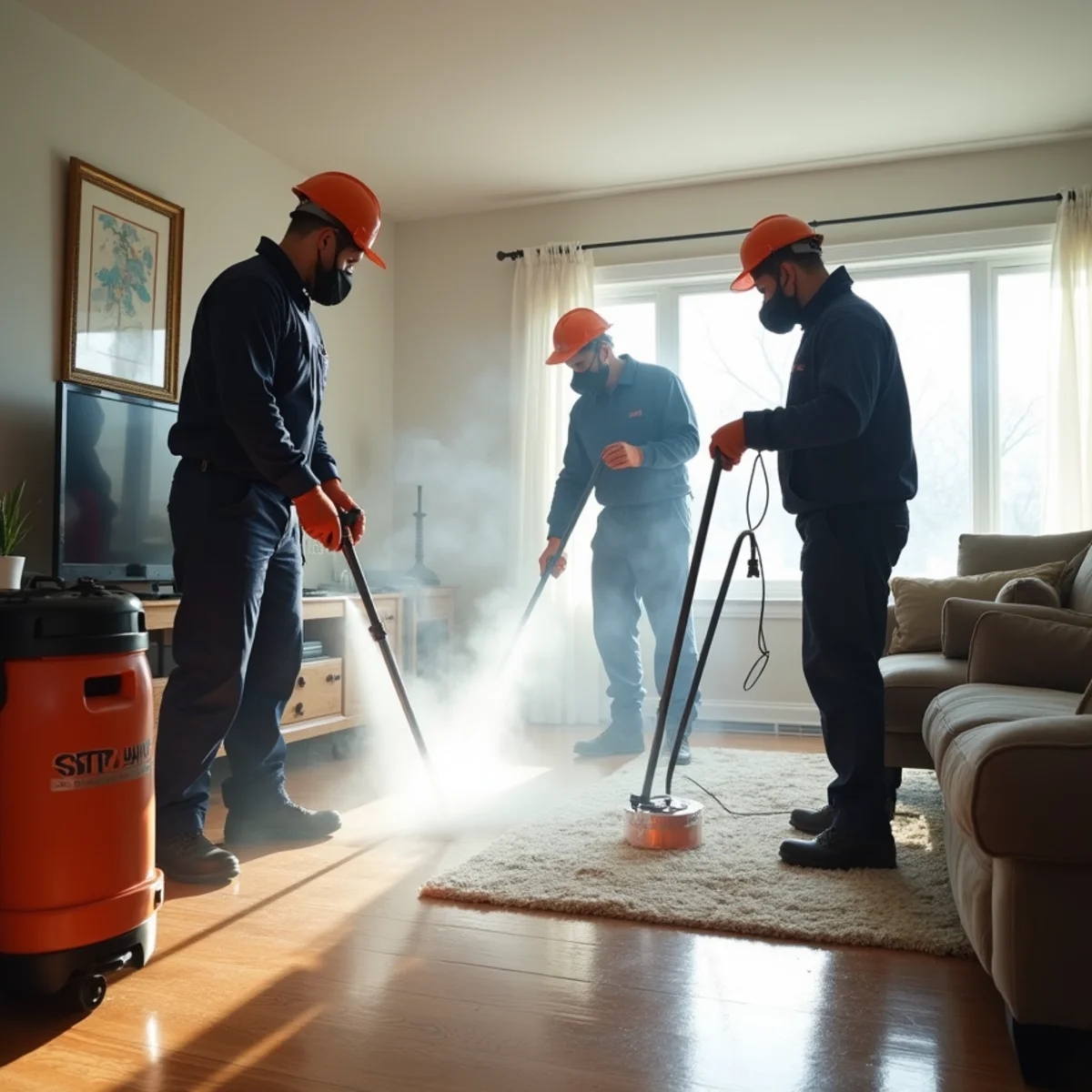
Repairing smoke damage in Alsip homes requires an exact seven-step chronological sequence: emergency containment and HEPA air scrubbing, source debris removal, dry chemical sponge surface cleaning, HVAC duct decontamination, thermal fogging deodorization, vapor-barrier shellac encapsulation, and structural reconstruction. Skipping any step risks permanent odor off-gassing. Call Sears Park Smoke Damage Experts at (407) 956-1738 for emergency response.
The 7-Step Smoke Restoration Roadmap
- Step 1: Emergency Site Containment & Negative-Air HEPA Scrubbing (stop particle migration).
- Step 2: Source Removal & Non-Salvageable Charred Debris Disposal under Cook County codes.
- Step 3: Dry Chemical Sponge Surface Decontamination (zero water in initial contact).
- Step 4: Specialized Alkaline Chemical Washing & Surface Neutralization.
- Step 5: HVAC Trunk Line Mechanical Scrubbing & Coil Decontamination.
- Step 6: Thermal Fogging & Hydroxyl Molecular Odor Neutralization.
- Step 7: Impermeable Shellac Primer Encapsulation & Final Drywall/Trim Rebuild.
“The most frequent mistake general contractors make when repairing fire-damaged homes in Alsip and Midlothian is doing things out of order. If you paint or seal walls before decontaminating the HVAC ductwork, the first time the furnace kicks on, it blasts soot back across freshly painted ceilings. Restoration is a strict scientific sequence where containment and dry removal must precede wet washing, deodorization, and encapsulation.”
Step 1 & 2: Emergency Containment, Negative Air & Source Debris Removal
The foundation of successful smoke damage repair begins before a single sponge touches a wall. When fire burns through a room, it creates billions of microscopic carbon, ash, and chemical soot particles that remain suspended in the air. Simply walking into the house stirs up this particulate cloud, forcing soot into previously clean bedrooms and living areas.
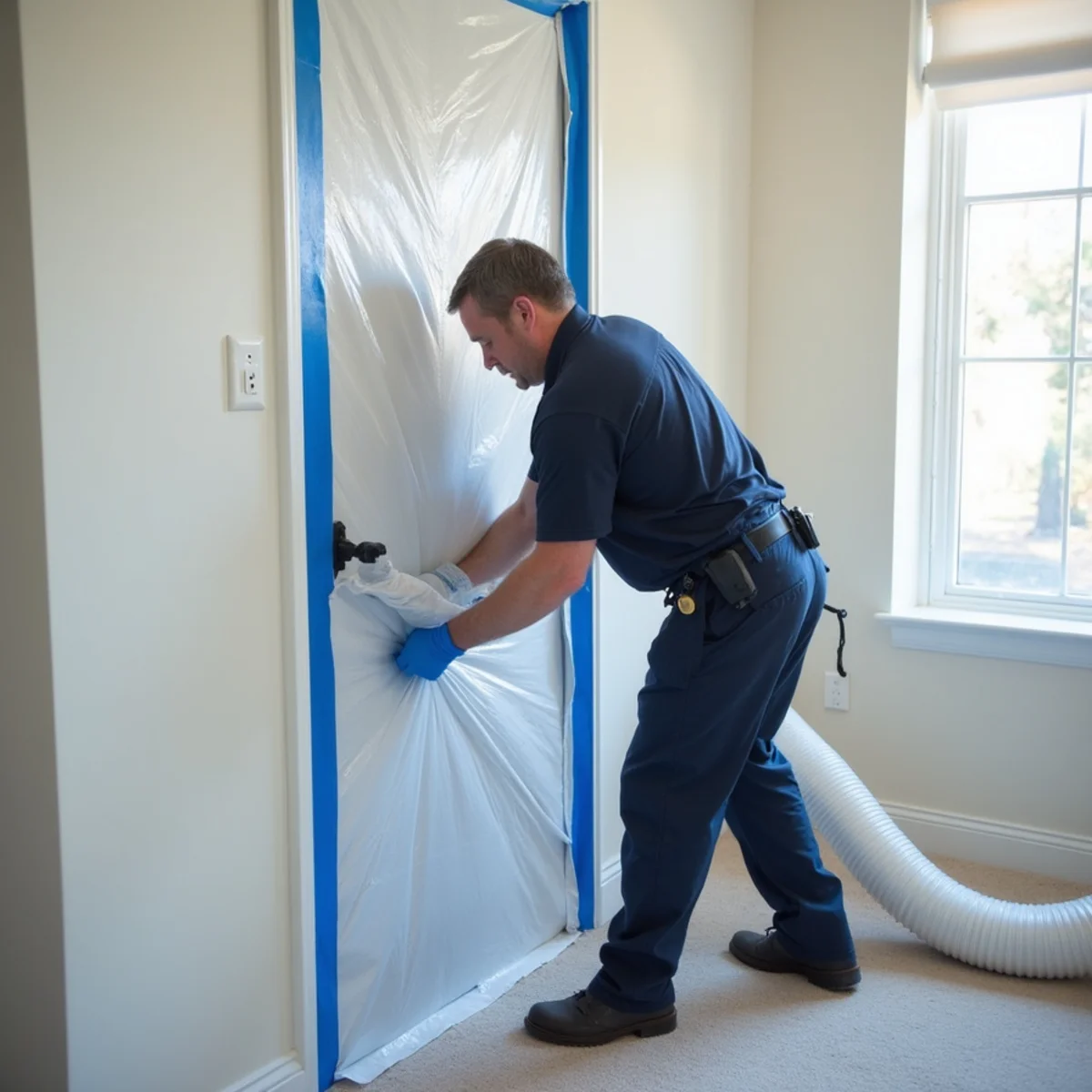
Technicians immediately erect **containment barriers** using heavy-duty 6-mil poly sheeting and magnetic or zippered entry portals to isolate the fire-damaged zone. Simultaneously, industrial negative-air machines equipped with 99.97% HEPA filtration are vented directly to the exterior. This establishes a continuous pressure differential: air from uncontaminated living zones is drawn inward toward the work zone, guaranteeing that soot cannot migrate through interior doorways.
Next comes **source debris removal**. Charred mattresses, burnt synthetic carpets, melted plastic appliances, and scorched furniture act as continuous odor generators. Leaving these items inside the structure allows volatile organic compounds to off-gas relentlessly. Certified crews catalog, photograph for insurance documentation, bag, and remove all non-salvageable debris to municipal disposal facilities in accordance with Cook County environmental guidelines. Air quality monitors are positioned to track total suspended particulates (TSP) and volatile organic compounds throughout the operation, ensuring airborne hazard levels drop progressively. Learn more about our initial stabilization protocols in [emergency fire damage restoration](/emergency-fire-damage-restoration/).
Step 3 & 4: Dry Sponge Stripping Followed by Alkaline Chemical Neutralization
Once containment is established and primary debris is cleared, surface decontamination proceeds in two distinct chemical phases:
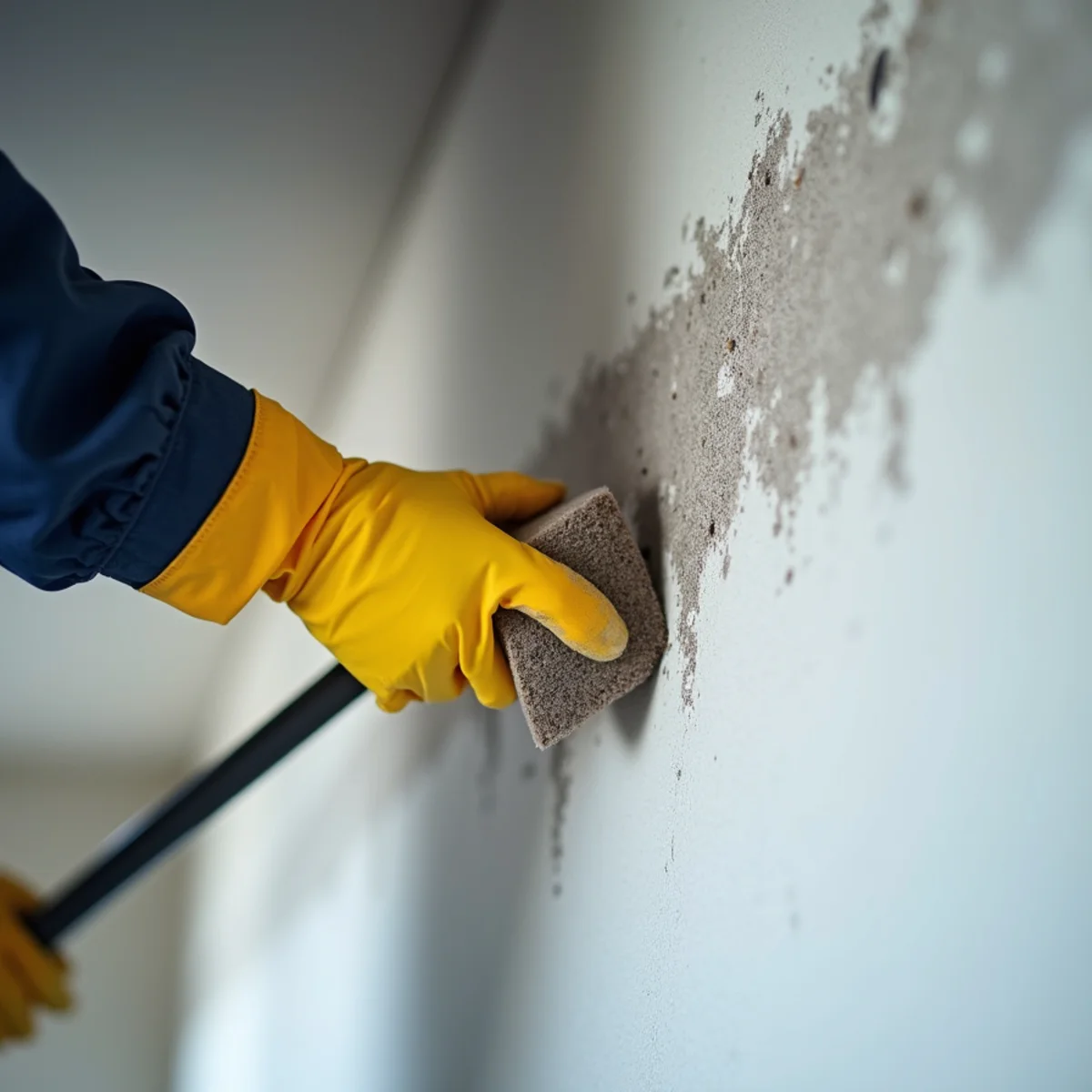
* **Phase 3: Dry Chemical Sponge Stripping:** Never apply water or liquid cleaners directly to soot-coated drywall or plaster. Dry soot particles dissolve into liquid slurries upon contact with moisture, driving black carbon deep into the paper backing and gypsum core of the wall. Technicians use vulcanized natural rubber sponges that utilize surface tension to lift dry soot off walls, ceilings, and wood trim with zero water. When a sponge side becomes saturated with carbon, it is shaved down with a utility knife to expose a fresh rubber surface.
* **Phase 4: Alkaline Wet Washing & Neutralization:** After dry particulate is removed, oily residues and acidic films must be broken down. Technicians execute a precision wet wash using professional-grade alkaline soot neutralizers and degreasers. The wash is performed strictly from **bottom to top**—a critical technique that prevents dirty wash water from running down dry, soot-covered walls and leaving permanent chemical drip streaks. Every section is wiped, neutralized, and followed by multiple clean-water microfiber rinses. Technicians change rinse buckets frequently to prevent re-depositing diluted soot back onto clean walls. Explore our specialized techniques for [smoke-damaged walls and ceilings repair](/repair-and-cleanup/smoke-damaged-walls-ceilings/).
Step 5: Whole-Structure HVAC Mechanical Decontamination & Encapsulation
In typical suburban Alsip, Crestwood, and Midlothian residences, central heating and air conditioning ductwork acts like an expansive secondary smoke chamber. If the furnace was operating during the fire, or if convective drafts pulled smoke into return air grilles, thousands of feet of sheet metal ductwork and interior fiberglass insulation are coated with corrosive soot.
Skipping HVAC decontamination guarantees that the home will re-contaminate the first time the furnace cycles on. Professional HVAC remediation incorporates:
1. Sealing all supply registers and return grilles with plastic film. 2. Attaching high-powered truck-mounted or portable 3,500 to 5,000 CFM negative-air vacuum collectors to the main trunk line. 3. Feeding high-velocity pneumatic rotary whips and air sweeps through every branch duct to dislodge adhered soot deposits directly into the negative-air stream. 4. Chemically washing and sanitizing the furnace blower cage, air conditioning evaporator coils, and burner assembly. 5. Fogging an EPA-registered antimicrobial encapsulant throughout porous interior duct boards to permanently lock down microscopic particulate matter.
Step 6: Molecular Deodorization via Thermal Fogging & Hydroxyl Treatment
Cleaning surfaces removes visible soot, but it does not eliminate the volatile gaseous compounds that have penetrated deep into wall studs, floor joists, and ceiling framing. Permanent odor elimination requires molecular-level chemical alteration.
Sears Park Smoke Damage Experts deploys an integrated two-technology deodorization regimen:
* **Thermal Fogging:** Technicians heat solvent-based pairing agents in commercial thermal fogging generators. The fogger vaporizes the solution into an aerosol mist with droplet sizes between 0.5 and 2.0 microns—precisely replicating the particle size and behavioral physics of the original smoke. This deodorizing mist penetrates into the identical hidden wall cavities, insulation layers, and structural joints where smoke molecules are trapped, chemically binding with them to permanently neutralize odor.
* **Hydroxyl Radical Oxidation:** Industrial hydroxyl generators run continuously for 48 to 72 hours. Hydroxyl radicals dismantle volatile organic compound structures via chemical oxidation, converting pungent hydrocarbons into harmless water vapor and carbon dioxide. Serving homeowners across [Crestwood](/service-areas/crestwood-il/) and [Midlothian](/service-areas/midlothian-il/), our technicians verify clearance before moving to final finishes. Explore our complete [smoke damage repair and cleanup](/repair-and-cleanup/) capabilities.
Step 7: Impermeable Vapor-Barrier Priming & Final Architectural Rebuild
The final stage of smoke restoration bridges the gap between remediation and complete reconstruction. Even after exhaustive cleaning and thermal fogging, structural surfaces must be sealed against future atmospheric fluctuations.
Restoration crews apply two continuous coats of an **impermeable white pigmented shellac primer** (such as Zinsser B-I-N) across all restored drywall, subflooring, and exposed framing timber. Shellac possesses a vapor-permeability rating below 0.1 perm, creating an airtight molecular barrier that prevents trapped moisture or residual smoke odors from ever off-gassing into the home.
Once encapsulation cures, licensed reconstruction tradesmen coordinate with local building officials. In Alsip, building permits may be required for drywall replacement exceeding statutory square-footage thresholds or involving insulation upgrades. Technicians hang new drywall, apply multi-coat taping and joint compound, match existing ceiling and wall textures (including orange peel, knockdown, or smooth plaster), install new baseboards and casing, and apply two coats of premium paint. The property is thoroughly cleaned, third-party air quality testing confirms zero particulate contamination, and your family returns to a pristine, safe home.
Need Professional Fire Restoration in Alsip?
Our 24/7 emergency response crews mobilize immediately with HEPA scrubbers, thermal foggers, and direct insurance billing.